Comprehensive modernisation of the western part of the Małaszewicze Transhipment Area. We are creating a certified, integrated rail corridor for exceptional consignments, linking the European Union with its most important eastern dry port.
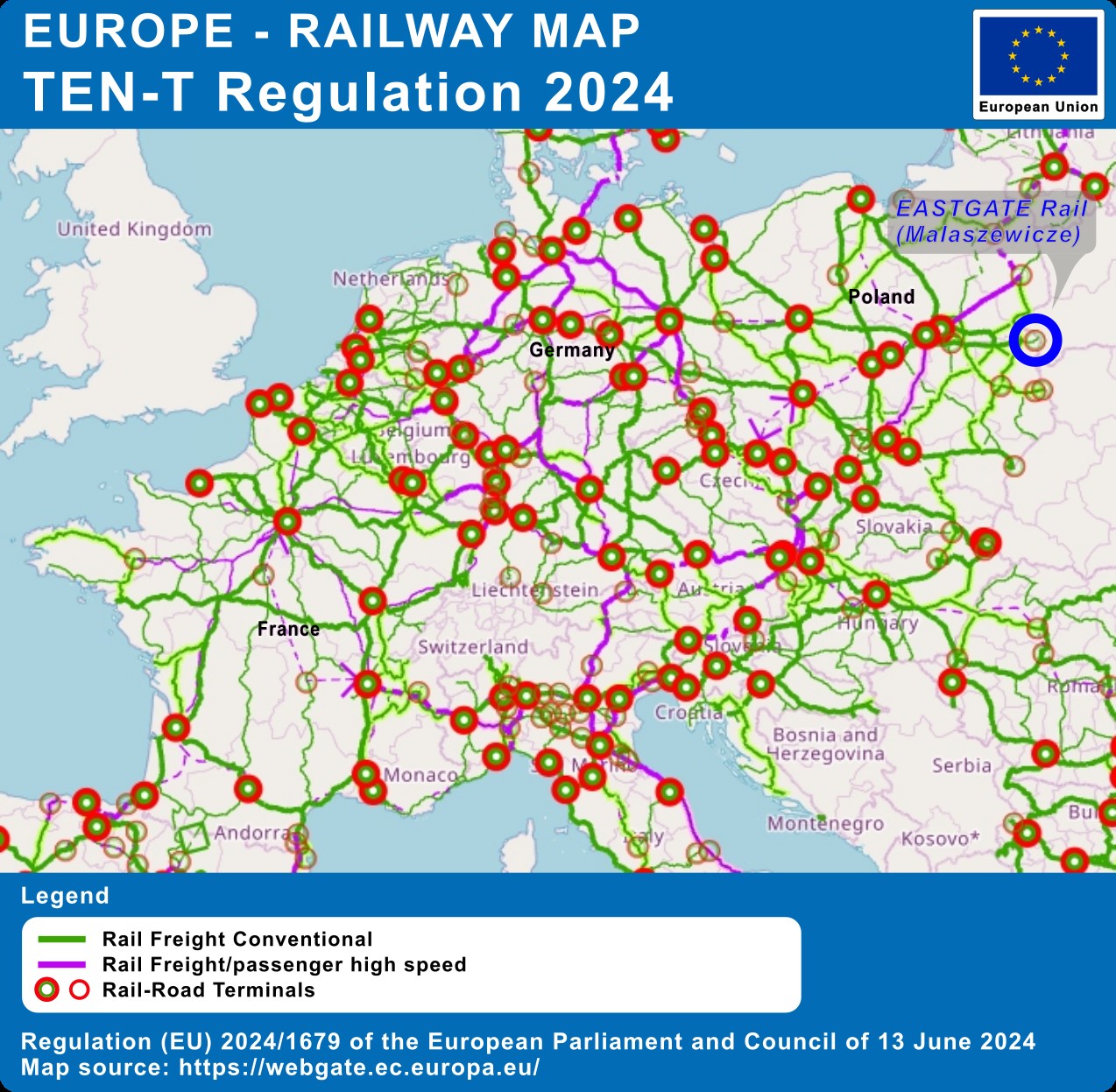
The Małaszewicze Transhipment Area is the largest and most important transhipment hub on the eastern border of the European Union. This is where the transport corridor from Western Europe covered by the TEN-T network (North Sea – Baltic) comes to an end.
The rapid growth of large-scale industrial and energy investment calls for efficient carriage of loads that exceed the loading gauge or standard rolling stock parameters.
EASTGATE RAIL removes these constraints on two fronts at once: by delivering the infrastructure investment at the Małaszewicze hub and by preparing an analysis of corridor parameters for railway undertakings.
Reconstruction of the western part of the Małaszewicze Area and construction of unloading facilities for exceptional consignments.
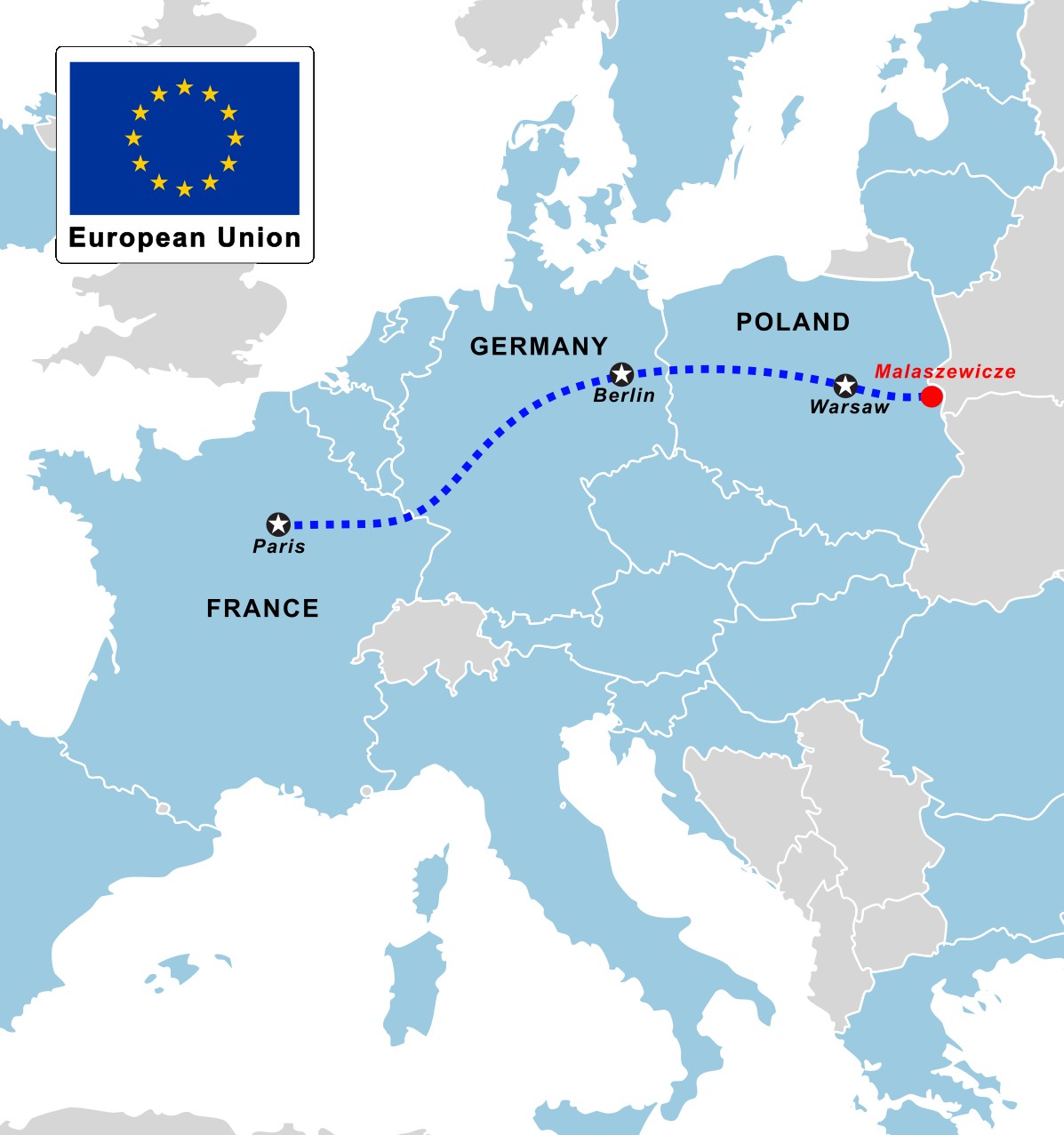
Analysis of the Polish extent of the corridor parameters along the Paris – Berlin – Warsaw – Małaszewicze route.
The investment delivered by CARGOTOR sp. z o.o. will provide round-the-clock handling of exceptional consignments in Poland.
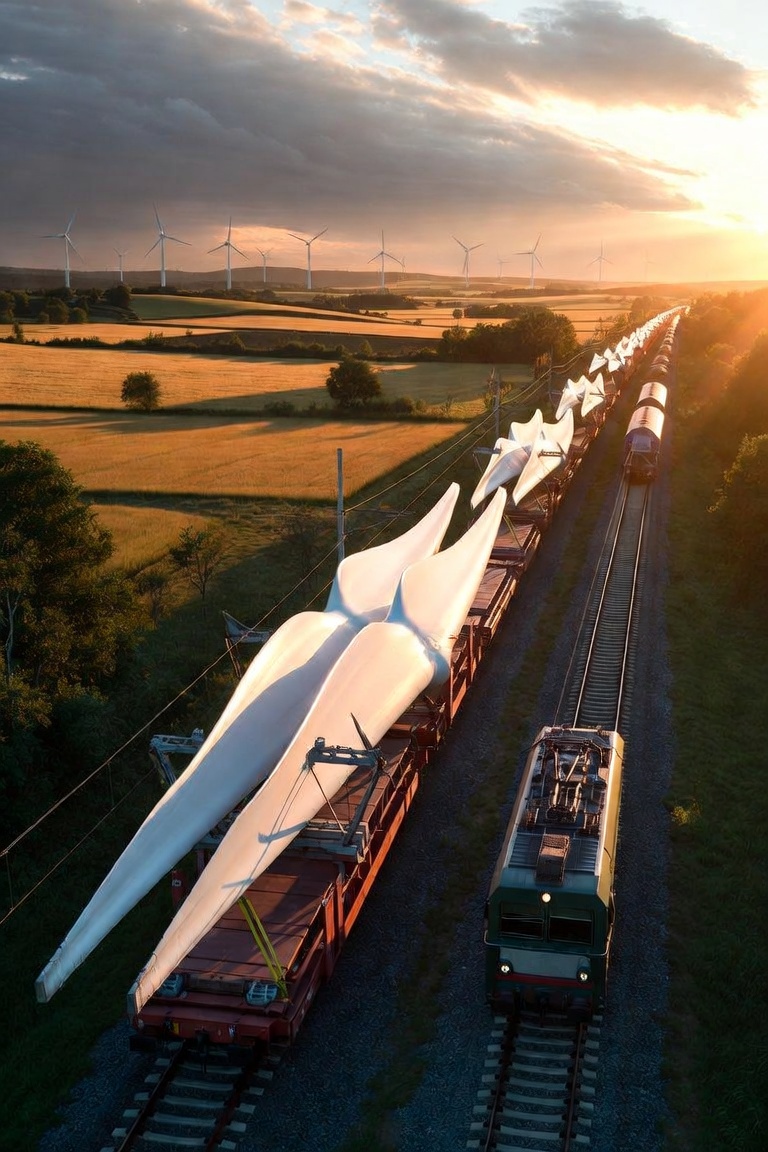
Terminal adapted for the direct transhipment of power transformers, rotors, pressure vessels and heavy vehicles of up to 120 tonnes.
An enlarged vertical clearance envelope allows over-dimensional consignments to be handled safely.
Full compatibility with the European TEN-T train length standard at an axle load of 22.5 t/axle.
Transhipment infrastructure designed for uninterrupted operation in all weather conditions.
Convenient access to the road interchange, enabling seamless multimodal transfer between rail and heavy-haul road trailers.
Modernisation of signalling and train control equipment and telecommunications.
Growing demand for the carriage of oversized loads stems from the rapid restructuring of Europe's industrial and energy landscape.
| Economic sector | Cargo characteristics | Role of EASTGATE RAIL |
|---|---|---|
| 🌱 Energy Transition | Wind turbine components (blades, nacelles), power transformers, generators, renewable energy installation modules. | Providing a corridor for energy and industrial modernisation in Poland and the CEE region. |
| 🏭 Heavy Industry | Hydraulic presses, chemical process equipment, rectification columns, heavy industrial machinery, complete production lines. | Safe transfer of equipment between plants in Western Europe and Poland, without the risk of road transport being halted. |
| 🇺🇦 Reconstruction of Ukraine | Mobile power installations, precast bridge elements, railway rolling stock, heavy construction and engineering plant. | Optimal use of the hub's location. |
| 🏗️ Construction & Rolling Stock | Large bridge structures, railway points and crossings, tunnel boring machines and more. | A cost-stable alternative with a guaranteed loading gauge on West–East routes. |
Road haulage of out-of-gauge loads requires permits that take weeks to obtain, costly escort vehicles, removal of roadside infrastructure and bridge load capacity assessments. There are no alternative inland waterway routes on the West–East axis. Rail offers a more competitive cost per tonne-kilometre and lower CO₂ emissions – provided that loading gauge parameters are guaranteed, which is exactly what EASTGATE RAIL delivers.
The project is a direct response to the revised Regulation (EU) 2024/1679 of the European Parliament and of the Council of 13 June 2024 on Union guidelines for the development of the trans-European transport network.
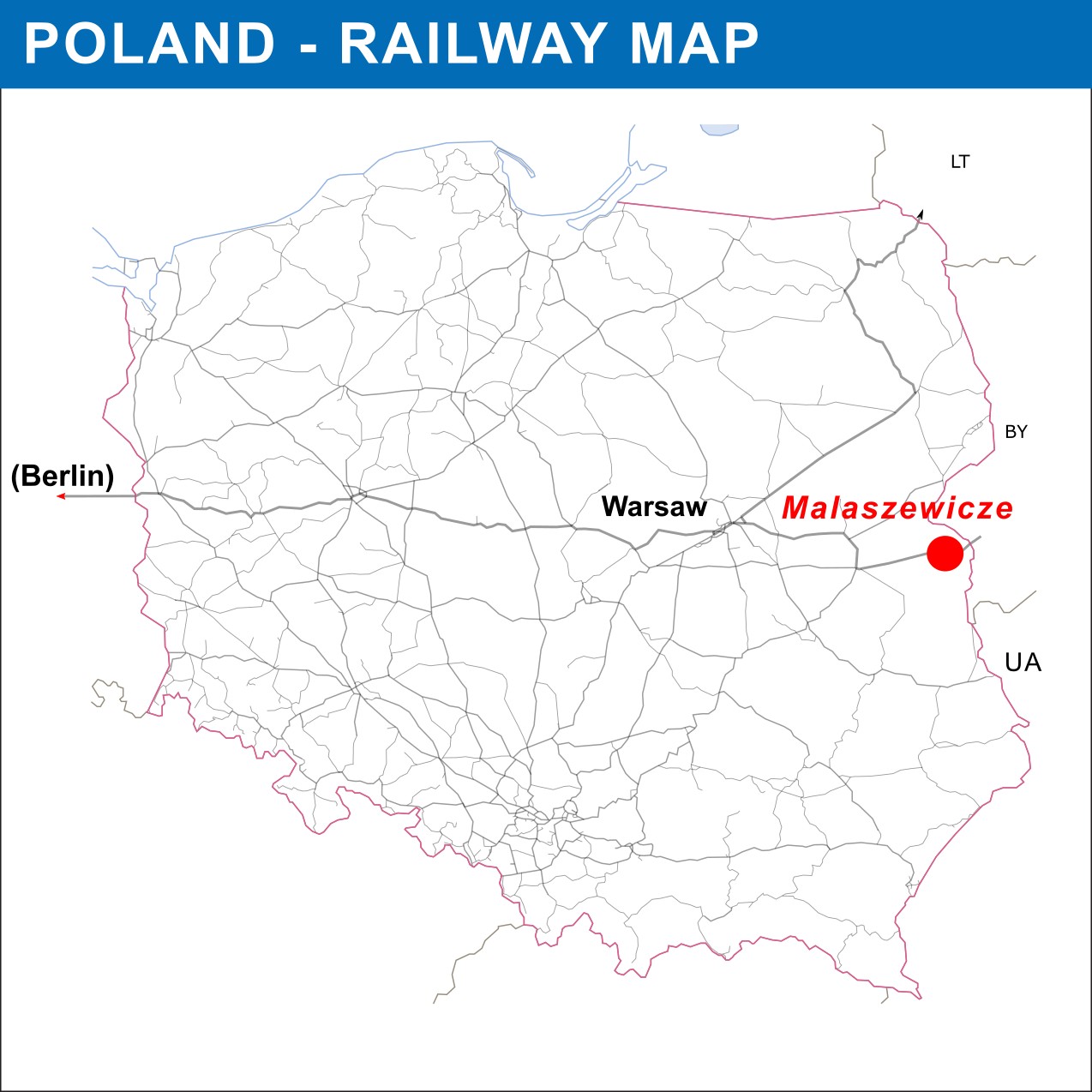
The route running from the Polish–German border via Warsaw to Małaszewicze forms the backbone of rail freight in Poland.
The project delivers benefits for freight on the European network, for the national economy and for the local community.
The investment is being delivered in close cooperation between government institutions and infrastructure managers.

A professional manager of the railway infrastructure of the Małaszewicze Transhipment Area. The company is responsible for the technical operation of this key transhipment point on the EU's eastern border.
A state budgetary entity that for almost two decades has been responsible for the professional coordination, appraisal and financial settlement of strategic transport investments co-financed from European Union funds.